
Call us : +91 9710612612




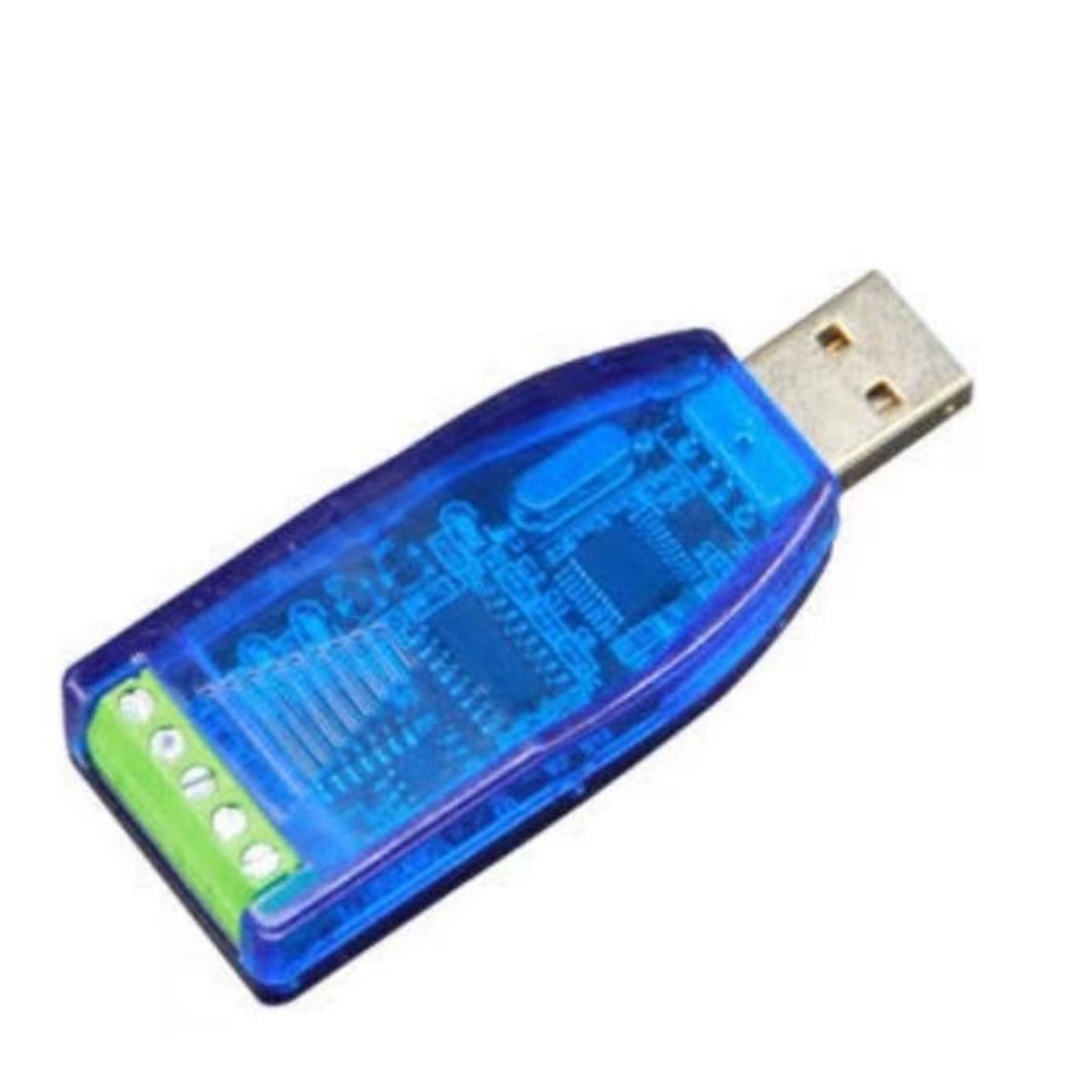
U485D
USB-RS485 INDUSTRIAL CONVERTOR MODULE
- USB Interface: USB Type-A Male (Plug and Play) Communication Standard: RS485 Operating Voltage: 5V (powered via USB) Data Transmission Rate: Up to 12 Mbps (USB), up to 10 Mbps (RS485, depending on cable quality) Communication Distance: Up to 1200 meters (RS485) Protection: Built-in TVS (transient voltage suppressor) diodes for surge protection ESD Protection: ±15 kV Operating Current: ~50–150 mA (varies by load) Operating Temperature Range: -20°C to +85°C
- RS485 Output (Terminal Block or Pins) A(+) / B(-): Differential RS485 lines GND: Common ground Some modules may also expose DE/RE (Driver Enable / Receiver Enable) pins Output interface can be: 3-pin terminal block (A/B/GND) or pin header/screw terminals
- Driver Chip Variants Common USB-to-Serial chipsets used: CH340 (cost-effective, requires driver) FT232RL (premium, plug & play in most OS) CP2102 (widely supported)
- Key Features Converts USB port to RS485 half-duplex serial interface Enables multi-point communication (up to 32 nodes on RS485 bus) Built-in surge protection, anti-static, and short-circuit protection Supports hot swapping (plug/unplug without restarting system) Compact, rugged design ideal for field/industrial environments LED indicators for TX/RX activity (on many models)
- Applications Industrial automation and control systems Modbus RTU communication between PC and device Remote meter reading and monitoring systems or microcontroller communication via RS485 Building automation (BMS), HVAC systems SCADA/HMI panel interfacing

